Recommendations for the Restoration of the Durban Art Gallery as a Premier Art Institution
POSTED ON: December 5, 2025 IN Reviews & Reports, Uncategorized, VAR DBNTo view full report download pdf here.
CONTENTS
- Recommendations 3
- Background to recommendations 7
- Objectives of the DAG stakeholder satisfaction survey
- Methodology of the survey, leading to the recommendations 8
- Limitations and challenges of survey 9
- Main findings of survey 11
APPENDICES:
A. Declaration of a Crisis 15
B. Preamble to the survey 18
C. Consent form for survey 19
D. Detailed responses to questions in the survey 20
E. List of respondents to the survey 75
F. Professional & demographic profile of survey respondents 77
G. Report on public meeting 82
H: Response to letter from the DAG director 86
1.RECOMMENDATIONS
1.1 RECOMMENDATION FOR THE DAG TO ESTABLISH AN ADVISORY COMMITTEE (AC)
Noting:
- Consensus among local visual arts practitioners that the DAG is an institution of major strategic value for the visual arts in eThekwini and KZN, and by extension nationally and internationally.
- The DAG is perceived to be failing in meeting its mandate.
- Problems at the DAG are wide-ranging, affecting programming, staffing, and communications.
- Many public museums have advisory or governance structures with civil society representation.
- Governance of municipal museums lies within municipal structures, which require active citizen input.
Resolve that:
- An Advisory Committee should be established, comprising equal representation from DAG and civil society.
- This committee should also oversee advisory subcommittees for Exhibitions, Acquisitions, and Education.
Mandate of the AC:
- Review the mission of the Durban Art Gallery and recommend changes if necessary.
- Review the Annual Performance Plan and recommend adjustments.
- Review organogram and staffing needs and recommend interventions.
Composition of the AC:
- DAG Director
- DAG Exhibitions Curator
- DAG Collections Curator
- DAG Education Curator/Officer
- Finance representative
- HR representative
- Civil society representative from Acquisitions Committee
- Civil society representative from Education Committee
- Civil society representative from Exhibitions Committee
- Additional civil society representatives (3)
Note:
- Chairperson and co-chairperson to be elected by committee members. One of these to be from DAG, the other from civil society.
- DAG to provide secretariat.
- Civil society representatives to be elected in open public meetings convened by VAR DBN.
- Frequency of meetings to be decided by the committee.
1.2 RECOMMENDATION FOR THE DAG TO ESTABLISH AN ADVISORY COMMITTEE FOR EDUCATION (ACE)
Noting that:
- DAG’s education programme is central to its mandate
- Current practice raises concerns regarding effectiveness and integrity.
- There is no advisory body for educations and programmes are developed with little input and evaluation.
Resolve that:
- An Advisory Committee for Education should be established with equal representation from DAG staff and civil society.
Mandate of ACE:
- Review the objectives, administration, and impact of DAG’s education programme.
- Evaluate alignment between the education programme, exhibitions, the collection, and the DAG resource centre.
- Identify areas for improvement and options for optimisation.
- Recommend actions to the AC.
Composition of ACE:
- DAG education officer
- DAG gallery assistant
- DAG librarian
- DAG director or proxy
- Additional staff member
- Civil society representative (university lecturer)
- Civil society representative (visual arts teacher)
- Civil society representative (non-formal education)
- Additional civil society representatives (visual arts educators x 2)
Notes:
- Chairperson and co-chairperson to be elected by committee members. One of these to be from DAG, the other from civil society.
- DAG to provide secretariat.
- Civil society representatives to be elected in open public meetings convened by VAR DBN.
- Frequency of meetings to be decided by the committee.
1.3 RECOMMENDATION FOR THE DAG TO RECONSTITUTE AN ADVISORY COMMITTEE FOR EXHIBITIONS (ACX)
Noting that:
- Exhibitions are central to DAG’s mandate.
- The visual arts community has expressed deep concerns regarding quality, consistency, and strategic direction of the exhibitions programme.
- There is no functional advisory body for DAG exhibitions.
Resolve that:
- An Advisory Committee for Exhibitions should be established with equal representation from DAG staff and civil society.
Mandate of ACX:
- Review content, administration and strategic direction of the exhibitions programme.
- Assess alignment between exhibitions, education, and the collection.
- Identify areas for improvement and recommend options for optimisation.
Composition of ACX:
- Curator of Exhibitions
- Curator of Collections
- DAG Director or proxy
- Curator (eThekwini Museums)
- DAG Education Officer
- Civil society representatives (e.g. curators, lecturers, teachers) x 5
Note:
- Chairperson and co-chairperson to be elected by committee members. One of these to be from DAG, the other from civil society.
- DAG to provide secretariat.
- Civil society representatives to be elected in open public meetings convened by VAR DBN.
- Frequency of meetings to be decided by the committee.
1.4 RECOMMENDATION FOR THE DAG TO RECONSTITUTE AN ADVISORY COMMITTEE FOR ACQUISITIONS (ACA)
Noting:
- A standard operating procedure for acquisitions exists, but inconsistencies in application and oversight have been noted.
- Acquisitions are essential for maintaining a diverse and relevant collection; governance lapses risk integrity.
- Concerns regarding the conditions under which the collection is stored.
Resolve that:
- The Acquisitions Committee should be re-established to ensure all acquisitions, donations, and bequests are reviewed transparently, consistently, and in line with professional standards.
- The scope of the ACA should be extended to consider matters affecting the safekeeping and maintenance of the DAG collection.
Mandate of ACA:
- Review the acquisitions policy.
- Review processes for purchases, donations, and bequests to ensure transparency and policy compliance.
- Review the DAG collection with a view to identifying strategic gaps in the collection.
- Assess effectiveness of current oversight and recommend improvements.
- Evaluate alignment between acquisition policy and strategic priorities.
- Recommend artworks to be purchased for the DAG collection.
- Review conditions under which the DAG collection is stored and maintained to ensure compliance with South African Museum and International Council of Museums standards.
Composition of ACA:
- Curator of Collections
- DAG Director or proxy
- Curator of Exhibitions
- Education Officer
- Finance Representative
- Civil society representatives (eg. curators, art historians, teachers, lecturers) x 5
- Background to recommendations
The recommendations contained in this document represent the culmination of a consultative process initiated by VAR DBN. The roots of this consultation stem from widespread concern amongst Durban-based visual arts practitioners regarding the state of the visual arts in eThekwini and the shrinking of opportunities for artists working in the City. This concern led to the formation of an informal alliance of locally-based visual arts workers who adopted the name VAR DBN (Visual Arts Revolution Durban). (Note that in the initial stages the alliance operated under the name Durban Visual Arts Crisis Committee, D_VACC)
The rationale for the formation of VAR DBN is outlined in a Declaration of Crisis adopted by the founding members of the alliance, and subsequently endorsed by most of the respondents to the survey (see Appendix A). The intention of VAR DBN is to work towards establishing a representative structure for the visual arts in eThekwini, in order to bring radical change to the position of the visual arts in the City, thereby impacting on the sector as a whole.
The VAR DBN collective began their assessment of the local arts ecosystem by looking at the Durban Art Gallery (DAG), a 132-year old arts institution with exhibition galleries and an extensive art collection, funded by the Parks, Recreation and Culture unit of the eThekwini Municipality. To formalise the assessment, VAR DBN undertook to conduct a survey of the perceptions of visual arts stakeholders of the performance of the DAG, a pivotal player in the local ecosystem and widely perceived to be in need of renewal. The survey and its outcomes constitute the background to the recommendations foregrounded in this document.
3. Objectives of the DAG Stakeholder Satisfaction Survey
- To conduct an objective study of perceptions of the DAG’s performance, from the perspective of the local visual arts community.
- To analyse responses to the Survey and draw up a comprehensive report, including a series of recommendations for remedial and proactive purposes.
- To present the interim report and its recommendations to the broad visual arts community for further input and feedback.
- To produce a final report, to be presented to the DAG, the City, Province, media, and any other relevant entity or constituency.
- To inform further actions designed to ensure the full and optimal functioning of the DAG.
4. Methodology of the survey, leading to the recommendations
The organising committee of VAR DBN drew up a questionnaire posing a range of questions that address the performance of the DAG. The committee further identified over 100 locally based visual arts workers as prospective respondents. Respondents included members of VAR DBN, due to members being an active and integral part of the local art community. DAG staff members were excluded from the survey, as were members of the Durban diaspora, i.e. those visual arts workers with historic ties to eThekwini who are not currently resident in the municipality. The survey was uploaded to google forms and 99 prospective respondents were sent a link, to which 66 responded within the two weeks allocated.
The survey contained the following elements: i) a consent form; ii) a preamble outlining the background and purposes of the survey; iii) questions regarding the professional and demographic profile of respondents; a list of 27 questions, with ratings between 0 and 10, and options to indicate insufficient knowledge and also to provide comment; v) a copy of the Declaration. The various elements of this form are featured for purposes of transparency in the Appendix. Of these elements, the Declaration has been updated to capture endorsements from most of the respondents.
The report went through various stages:
- A draft report on the findings of the survey was presented to the DAG Director on 7 July 2025
- The draft was circulated to respondents on 23 July 2025 and shared with public, through Facebook, on 23 July 2025
- The draft was presented at a public meeting featuring representatives of VAR DBN and the DAG on 31 July 2025
- A report on the meeting, written on behalf of VAR DBN, was published on the ASAI website on 14 August 2025.
- The DAG director submitted a written response to the report and public meeting to VAR DBN on 27 August 2025.
- A response to the DAG director’s letter was sent to him by the organising committee on 17 November 2025.
- The VAR DBN organising committee drew up a series of recommendations based on the draft report and subsequent responses to it. This was sent to the survey contributors for further comment on 27 September 2025.
- The final set of recommendations and report was approved by the organising committee on 24 November 2025.
5. Limitations of the survey
VAR DBN understood from the outset that the report would be based on perceptions of performance by the DAG. The validity of this approach was premised on the assumption that members of the local visual arts community are familiar with the operations of the DAG and would be able to speak from the perspective of their own experience. Further that such perceptions would be credible if sourced from a broad and representative sample of the local visual art community. It was further assumed that the report would foreground specific aspects requiring further investigation.
Members of the organising committee are functioning within a broader environment perceived to be in crisis. Further, as this survey demonstrates, most visual arts workers perform multiple roles. These interlinked factors impacted on the capacity of VAR DBN. This was evident in that the researchers did not manage to make contact with the full list of prospective respondents within the two weeks allocated for this task. Further, the process of analysing the data and preparing the report took significantly longer than anticipated.
In retrospect, further shortcomings of the survey became evident:
- Some of the questions could have benefitted from tighter framing. For instance, respondents were asked about ‘staff’ with no distinction being made between the divergent posts at the DAG; a question was posed regarding ‘leadership’ with insufficient clarity whether this referred specifically to the director or a broader, collective institutional leadership; questions regarding the ‘exhibitions program’ did not differentiate between exhibitions curated by DAG staff and those which were externally curated and installed. Furthermore, the questions did not state the timeframes relevant for the survey, with some respondents providing ratings based on outdated information.
- The emphasis on ratings meant that few respondents provided comments. This meant that researchers were required to interpret data that was principally quantitative, with the survey generating limited qualitative data.
- Technical challenges were experienced in sourcing some of the data. In order to capture ratings or ‘don’t know’, and also allow comments, it became impossible to ensure that all respondents either provided ratings or selected ‘don’t know’. There were some instances where respondents provided comments in lieu of ratings, and also cases where a comparatively small number of responses provided neither ratings nor did they select ‘don’t know’. There were also a few cases where respondents provided a rating but also ticked ‘don’t know’ – in these cases the rating was discarded. And in a few cases respondents provided two ratings for the same question, in which case this input was adapted to reflect an aggregate score based on their responses.
Notwithstanding these limitations and challenges, VAR DBN is satisfied that the quantitative findings, augmented by comments, proved sufficient to highlight major sources of concern. Further, that the number of respondents, coupled with their professional and demographic profiles, presents a representative sample of the views of visual arts workers active in eThekwini.
6. Main findings of survey
The overwhelming perception of the DAG among the local visual arts community is of an institution underperforming, lacking adequate leadership and lacking commitment and engagement on the part of its staff.
The highest scores generated by the survey concern the potential of the DAG: the need to revive the Friends of the DAG received an average score of 90%, and the prospects of participation of survey respondents in the Friends scored 78%. There was less consensus on the potential contribution of the DAG to tourism, which scored 61%.
Questions addressing perceptions of the quality of the material resources of the DAG resulted in scores that suggest that the problems of the DAG have more to do with attitude and performance than they do to the availability of resources. The quality of the DAG collection scored 51% and the quality of the DAG reference library scored 46%. However, access to the collection scored 29% (with many respondents apparently unfamiliar with the collection) and access to the library scored 36% (with most respondents having no idea that it existed, despite having been in existence for at least 50 years). The poor score for the DAG’s use of its own space (28%) supports the interpretation that the DAG does not make proper use of available resources.
The most alarming findings of the survey relate to the performance of the DAG. The overall performance of the DAG scored 28%. Staff performance scored 32%. Leadership scored 26%.
Questions addressing core programs invariably received low scores. The exhibitions program scored 35% and Education scored 26%. The DAG’s management of Articulate Africa scored 30%, while the impact of Articulate Africa on the visual arts scored 29%.
The highest score pertaining to the performance of the DAG was 45%, which was for exhibition openings, although comments concerning the collapse of a program of exhibitions curated by DAG suggests that this score is based on past experience and that there is also a lack of differentiation between externally generated events that use DAG as a facility and exhibitions produced by DAG itself.
Certain questions addressed the extent to which the DAG interacted with the broader visual arts community. The DAG’s participation in local arts events scored 22% and its openness to collaborations scored 25%. Communication with the public scored 23%. These low scores foreground the public perception of the DAG as disengaged from the sector.
The paucity of high scores is mirrored in the presence of very few favourable comments, with these mostly referring to the past. Several comments noted a decline in the quality of performance.
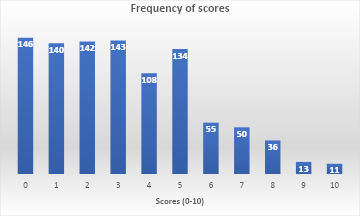
It should be a matter of grave concern to all stakeholders that the most frequent score elected by survey respondents was zero (146 responses), which was marginally higher than that for the low scores of one, two and three (10%, 20%, 30%). The prevalence of zero as a score reflects the perception that DAG is doing nothing at all to implement its mandate on several fronts. Certainly, such a perception may be informed by recent experiences. However, it can also be observed that some of these zero ratings are not objective – it is not credible, for example, to rate the DAG collection at zero. In such instances, the researchers conjecture two interlinked interpretations: i) that uninformed perceptions on the part of some respondents are a consequence of poor communication by DAG; and that: ii) dissatisfaction with the DAG may have led some respondents to respond emotionally.
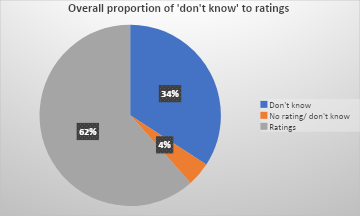
The number of ‘don’t knows’ (542, or 34%) was also very high, comprising more than half of the total number of ratings from respondents (978, or 62%). This statistic appears to corroborate the view that there is an overlap between DAG’s virtually non-existent communications and public alienation from the DAG, leading to a significant segment of the local art public being both uninformed and misinformed about specific operations of the DAG.
The question that generated the highest number of ‘don’t knows’ (44) and conversely the lowest number of ratings (21) concerned the quality of conservation at DAG. With only 32% of respondents confident to rate the standard of conservation, it can be further noted that related questions also received a low number of ratings. Only 28 respondents (42%) rated access to the collection and the handling of artworks. In these instances the prevalence of don’t knows is a particular point of concern. This concern is fed by comments alleging sub-standard conditions for the storage of artworks, coupled by low scores for conservation; and anecdotal observations by visitors to the DAG of paintings soiled by handprints. Given widespread perceptions of an institution performing at an unacceptably low standard, the data generated by the survey introduces concerns about the DAG’s capacity to safeguard its major asset, namely the Collection.
A further finding of the survey is that while many members of the local visual arts community are critical of the performance of the DAG, more especially the commitment of its staff to the sector, many are willing to participate in reviving the DAG. The high ratings – 88% of respondents rating the need to revive the Friends of the DAG as 90%, and with 79% of respondents rating the prospects of their involvement in the Friends as 78%, all scores way above all others in the survey; indicate the plausibility of a positive scenario. Similarly, an overwhelming number of respondents indicated their interest in receiving the report and having the option to endorse the recommendations; as well as their willingness to participate in steps to implement the outcomes of the report.
Share


